
Beetle Science Workbook for Kids – Printable PDF
€9.99
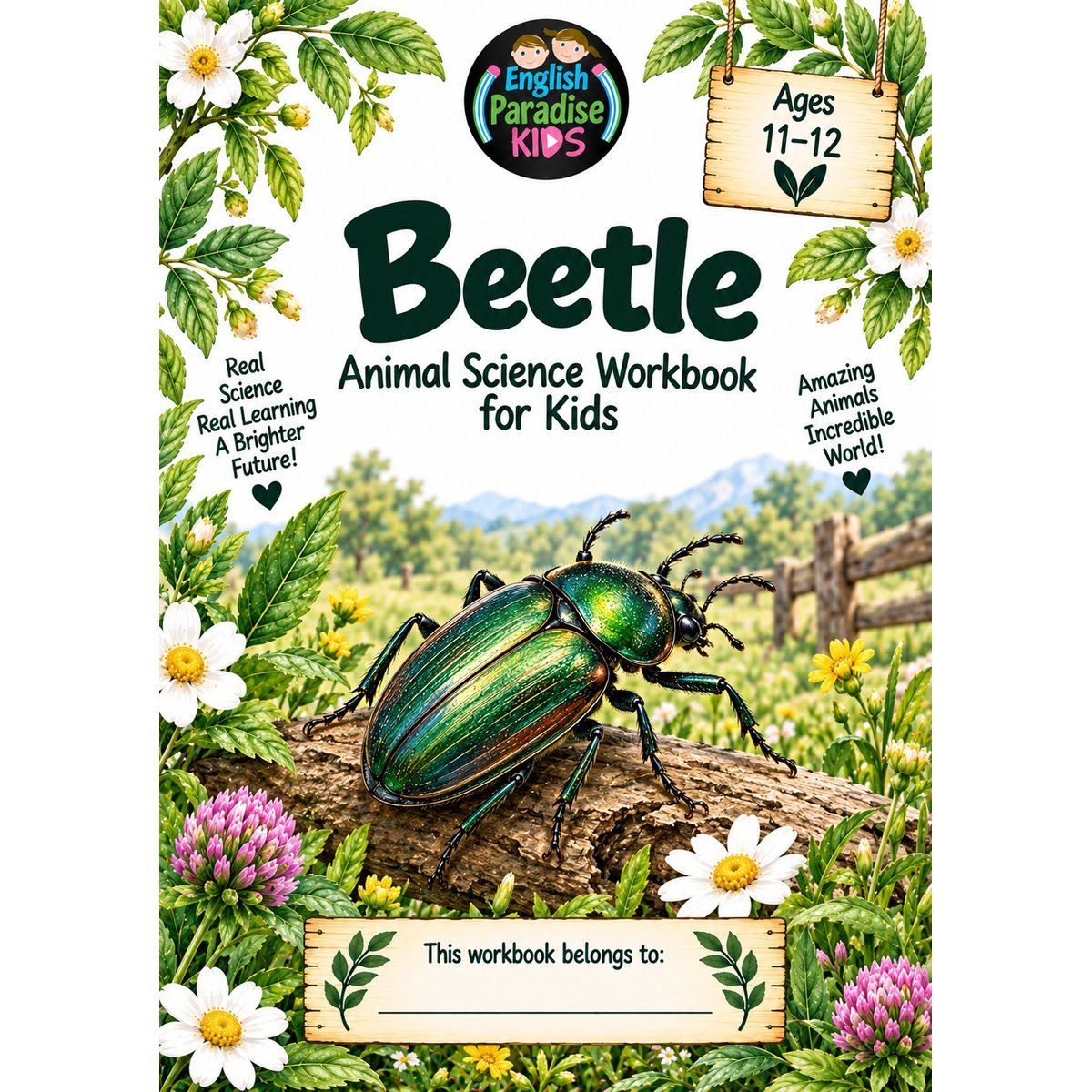
Explore the fascinating world of beetles with this beautifully illustrated Beetle Science Workbook for Kids, designed for ages 11–12.
Children discover beetle anatomy, life cycles, species, diets, food chains and ecosystems through engaging science activities.
- 26 printable pages
- Ages 11–12
- Types of beetles
- Beetle anatomy
- Beetle Life Cycle
- Diet and predators
- Food chains
- Habitats and ecosystems
- Think Like a Scientist activities
- Beetle conservation
- Internal anatomy / Virtual Dissection
- Answer Key included
- Instant PDF download
Perfect for classrooms, homeschooling, insect studies and science learning at home.
❧ What’s Inside? ❧
Take a peek inside and see some of the activities!
About This Workbook
Discover the Amazing World of Beetles
Explore one of the most diverse groups of animals on Earth with this beautifully illustrated Beetle Science Workbook for Kids.
Designed for ages 11–12, this 26-page printable workbook combines science, observation and hands-on activities. Children discover how beetles live, grow and interact with nature.
Discover What Makes a Beetle Unique
Children learn that beetles are insects with hard wing covers called elytra.
They explore beetle habitats, diets, shapes and colors. They also identify important body parts, including the head, antennae, thorax, legs, abdomen and elytra.
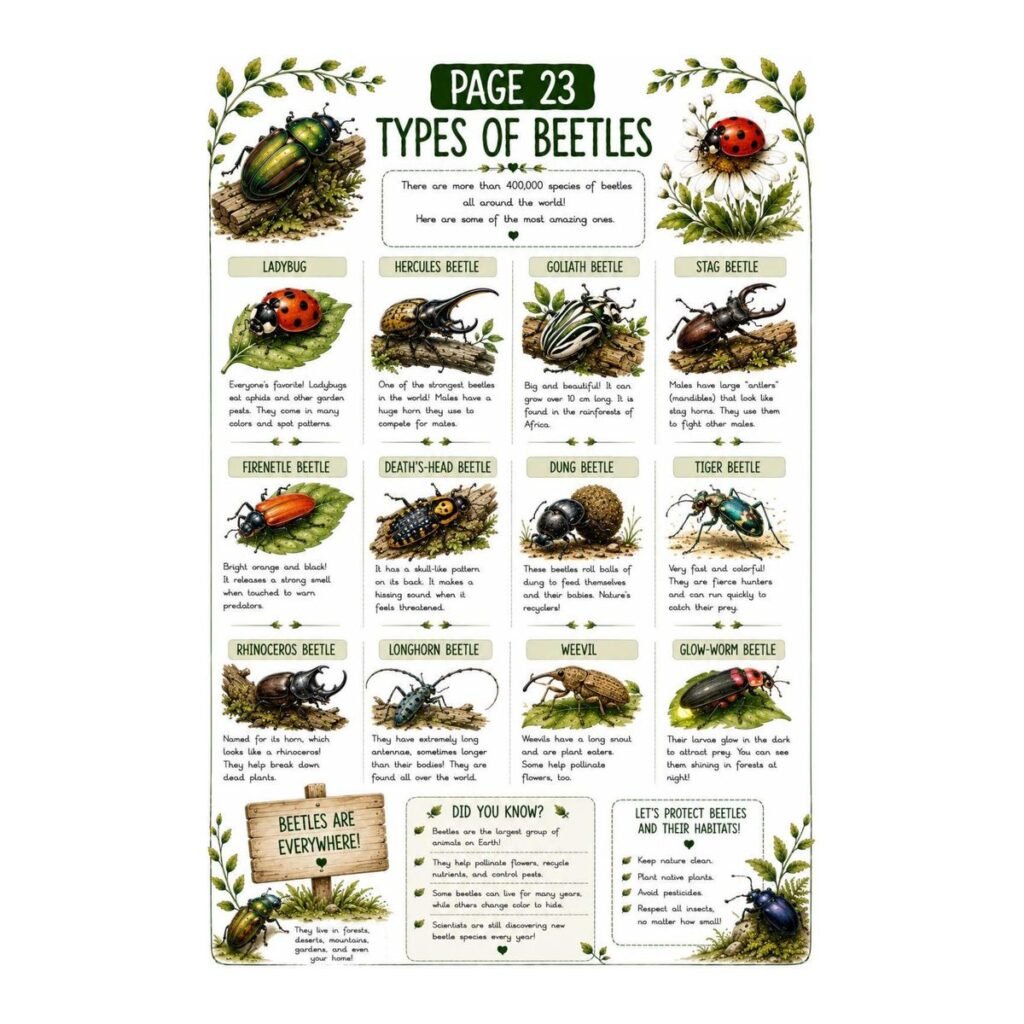
Meet Different Types of Beetles
Beetles come in an amazing variety of shapes and sizes.
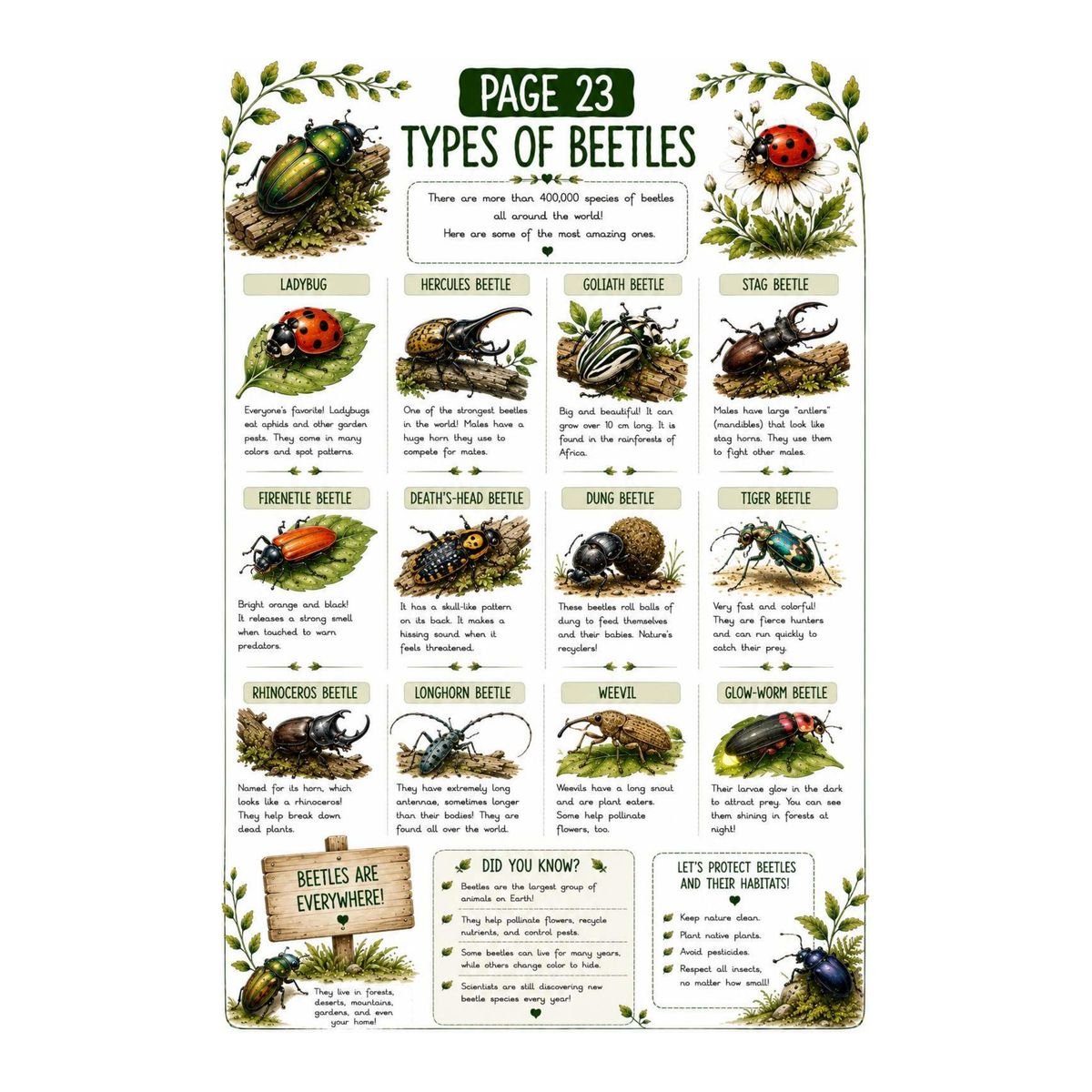
Children meet the Stag Beetle, Lady Beetle, Rhinoceros Beetle, Firefly, Dung Beetle and Longhorn Beetle. They compare their appearance, size and habitats.
Later, a visual reference page introduces even more beetles. These include the Hercules Beetle, Goliath Beetle, Tiger Beetle, Weevil and Glow-worm Beetle.
Explore Beetle Anatomy
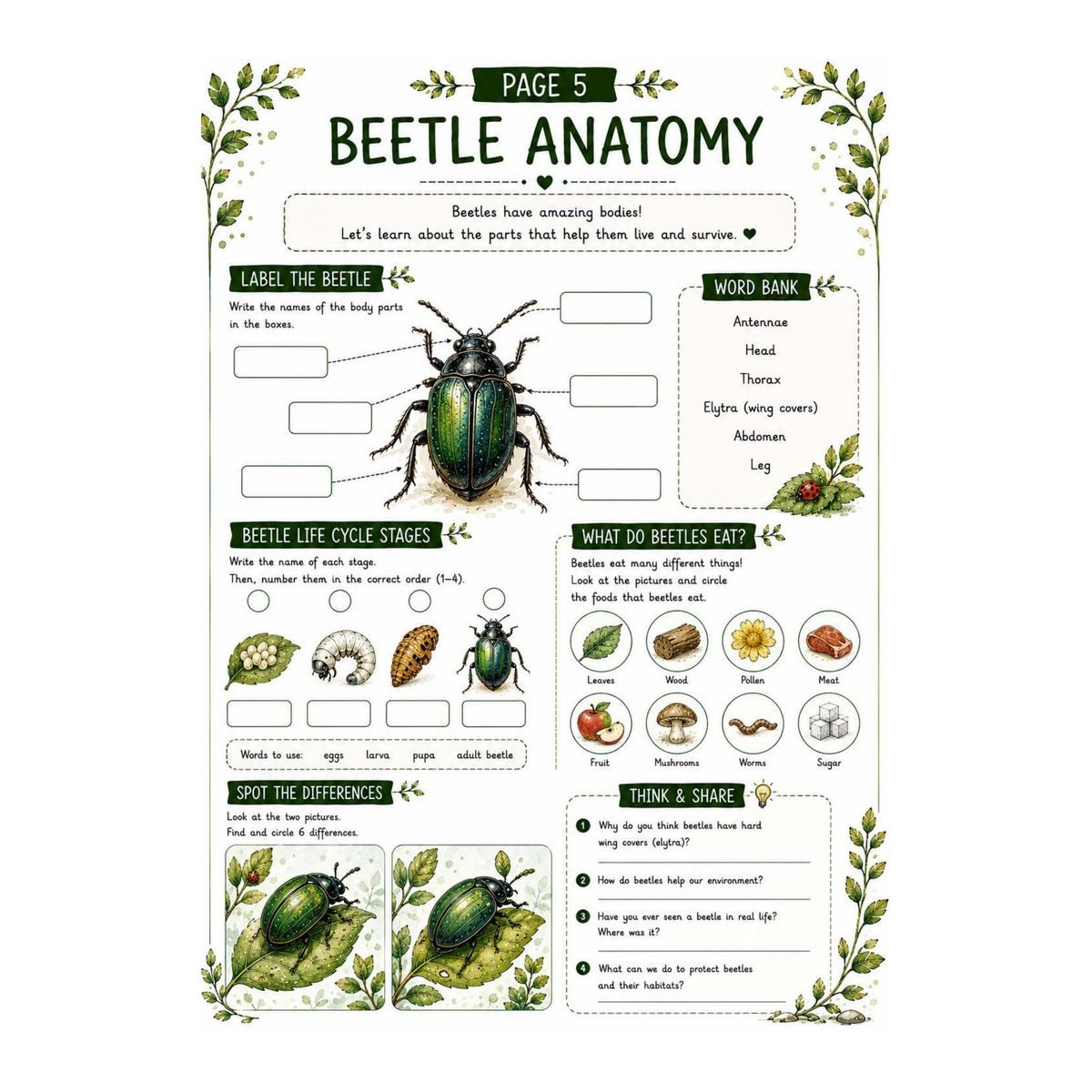
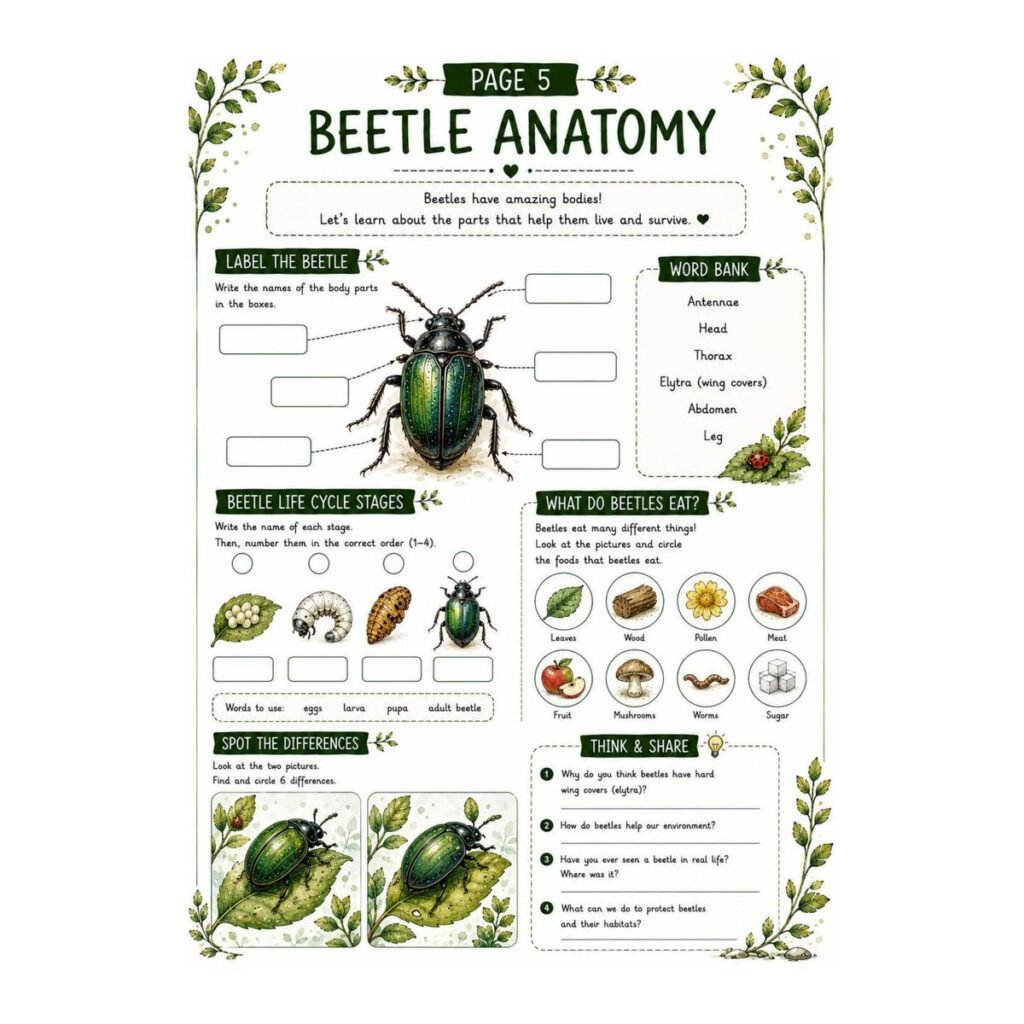
The Beetle Anatomy activities help children understand how a beetle’s body works.
Children label the antennae, head, thorax, elytra, abdomen and legs. A more detailed anatomy page also introduces compound eyes, mandibles and the pronotum.
They then connect each body part with its function. This encourages children to understand anatomy instead of simply memorizing labels.
Follow the Beetle Life Cycle
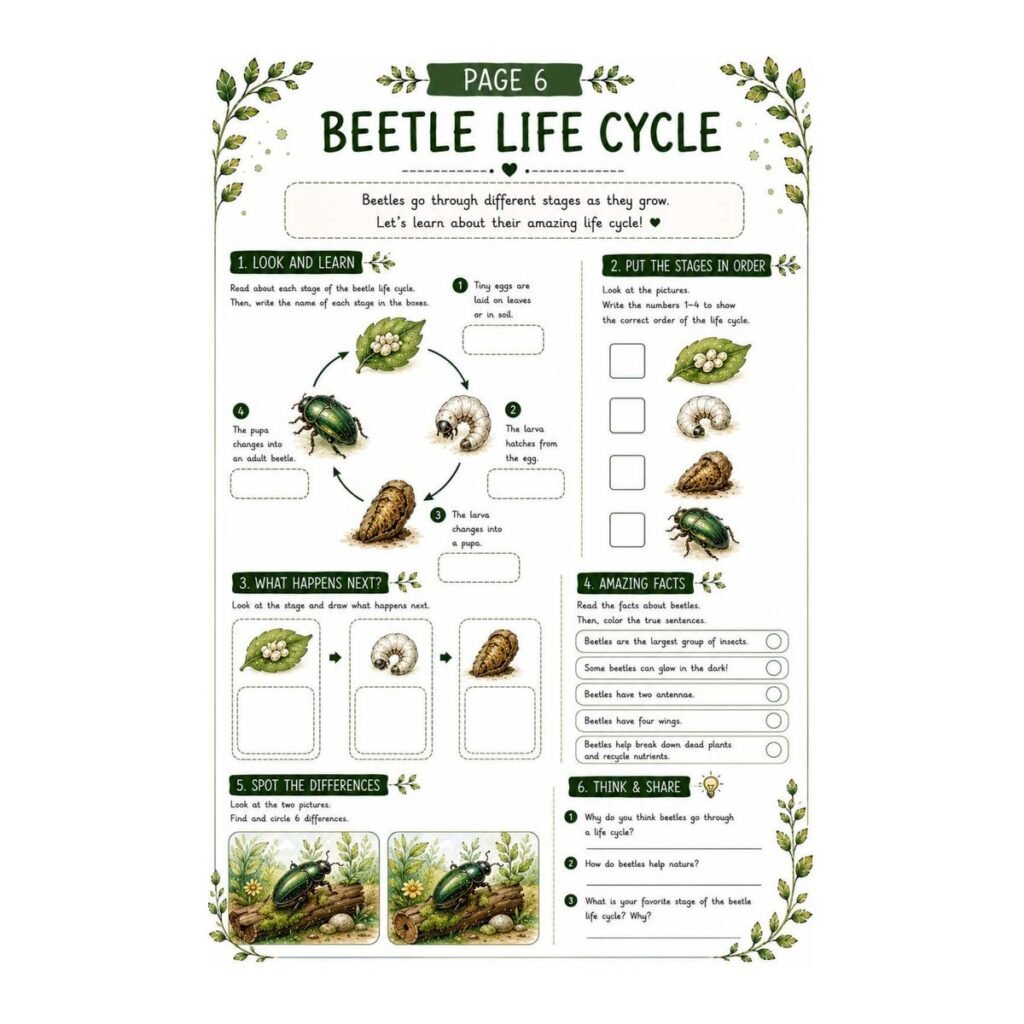
Children investigate the four stages of the Beetle Life Cycle:
Egg → Larva → Pupa → Adult Beetle
They put the stages in order and describe what happens during each stage.
Explore Food Chains and Ecosystems
What do beetles eat? What eats a beetle?
Children investigate leaves, wood, pollen, fruit, mushrooms, worms and other food sources. They also explore beetle predators and build simple food chains.
These activities help children understand the important role beetles play within ecosystems.
Discover Amazing Beetle Facts
Beetles have some extraordinary abilities.
Children discover that some beetles glow, some roll dung and others have powerful jaws. They also learn about the enormous variety of beetles found around the world.
Compare, Observe and Investigate
The workbook goes beyond basic facts.
Children compare beetles with other insects, investigate habitats and complete detective-style activities. They also use observations to answer questions and explain their reasoning.
Think Like a Scientist
The Think Like a Scientist! page introduces scientific thinking in an accessible way.
Children work with hypotheses, cause and effect, observations and predictions. They can even design a simple experiment and record what they expect to discover.
Learn Why Beetles Matter
Children explore how beetles interact with their environment.
They learn about decomposition, pollination, soil health and food chains. They also investigate how human actions can affect beetle habitats.
Protect Beetles
The workbook encourages children to become Beetle Heroes.
They consider simple ways to protect beetles, such as planting flowers, avoiding harmful chemicals, leaving natural materials on the ground and providing clean water.
Explore Inside a Beetle
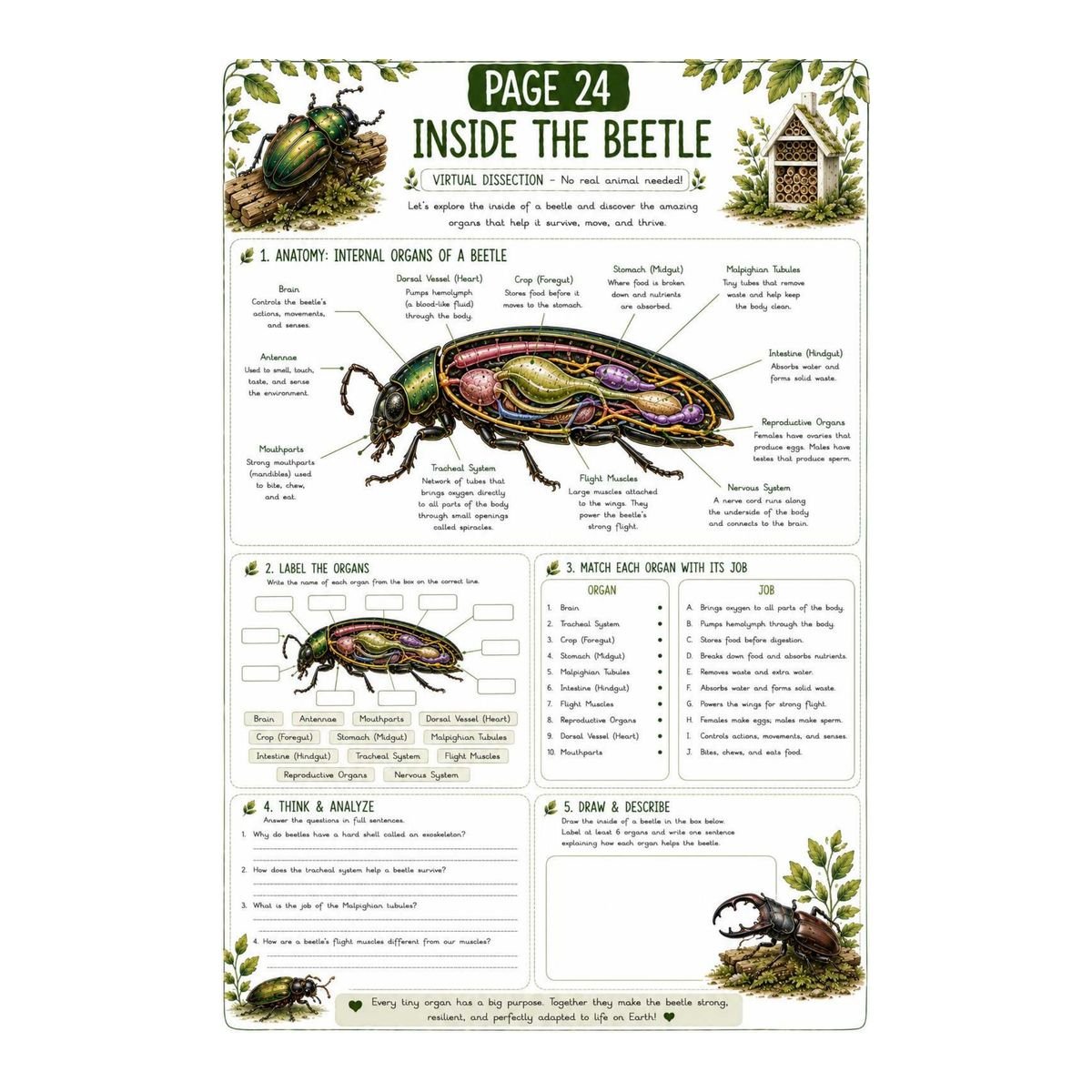
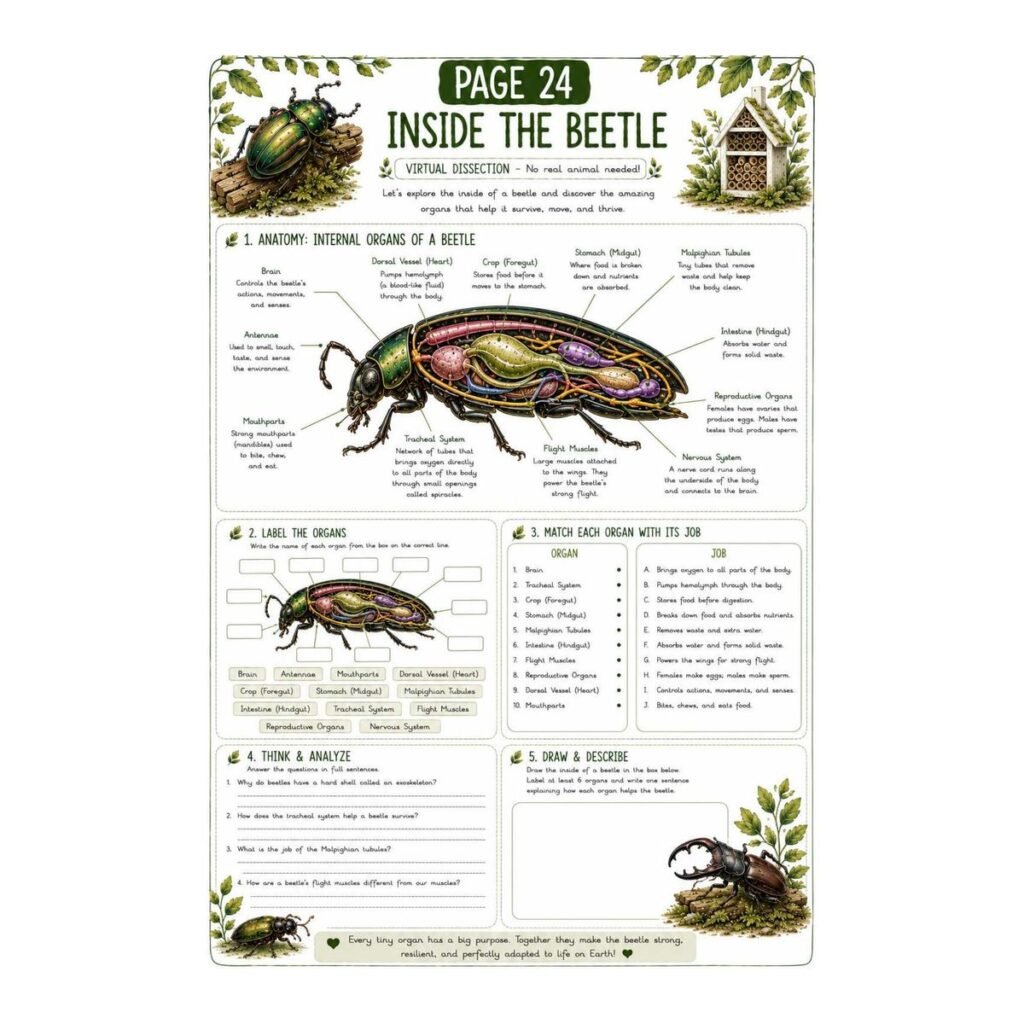
One of the most detailed pages is Inside the Beetle – Virtual Dissection.
Children explore internal anatomy and learn about structures such as the brain, antennae, mouthparts, dorsal vessel, stomach, Malpighian tubules, intestines, tracheal system, flight muscles, nervous system and reproductive organs.
They then label the organs and match each structure with its function.
What’s Included
- Meet the Beetle
- What Is a Beetle?
- Types of Beetles
- Beetle Anatomy
- Beetle Life Cycle
- Amazing Beetle Facts
- What Do Beetles Eat?
- Predators of Beetles
- Beetle Food Chains
- Fact Detective
- True or False activities
- Compare & Contrast
- Beetle Detective
- Protect Beetles
- Be a Beetle Hero
- Beetle Adventure
- Beetles & Their Environment
- Think Like a Scientist
- Types of Beetles reference page
- Internal Anatomy / Virtual Dissection
- Answer Key
- English Paradise Kids Thank You & Credits page
Product Details
- 26 printable pages
- Designed for ages 11–12
- Digital PDF format
- Instant digital download
- Beetle anatomy and life cycle
- Food chains and ecosystems
- Scientific thinking activities
- Conservation activities
- Internal anatomy / Virtual Dissection
- Answer Key included
- Suitable for home or classroom printing
- No physical product will be shipped
Perfect for classrooms, homeschooling, insect studies, science units and nature learning.